

C. Militaris: There are Cordyceps in the Midwest

I have been pretty into the idea of apocalypses lately, especially after watching the new Resident Evil (Zach Cregger, 2026) and learning about pathogens in my pathogen genomics class. It seems like fall bring this excitement along every year... (check out my blog on a hypothetical Midwestern apocalypse).
When you hear "cordyceps" you probably think of the video game and show, The Last of Us. If you aren't familiar, imagine a zombie-like creature overcome with a brain-altering fungus. Pretty intense, right? I think these monsters are so creepy, but I think they are very well designed, especially considering what they are based off of.
Cordyceps are a real thing, and they infect a variety of insects the same way the cordyceps in The Last of Us infect humans. The genus includes around 300 species of different fungi around the world, most of which are parasitic to insects and some other fungi.
The species that I will be focusing on today is Cordyceps militaris, otherwise known as caterpillar fungus. The origin of this fungus is actually not known (I researched into the depths of the internet for the answer), but it is common across the temperate regions in the Northern Hemisphere, including in the American Midwest! Despite being a parasitic organism, it actually is popular for its traditional medicinal purposes in Southeast Asia. In traditional Chinese medicine, it is believed to protect the lungs, benefit the kidneys, and stop bleeding among other things.
Cordyceps militaris infects pupae or larva buried underground, kills the entire colony, and then grows its identifiable orange-yellow stoma. Because the fungi infect insects that are underground, it looks a lot like a mushroom growing through the soil. Its main hosts include moth, butterfly, and beetle pupae and larva (Cole, 2026).
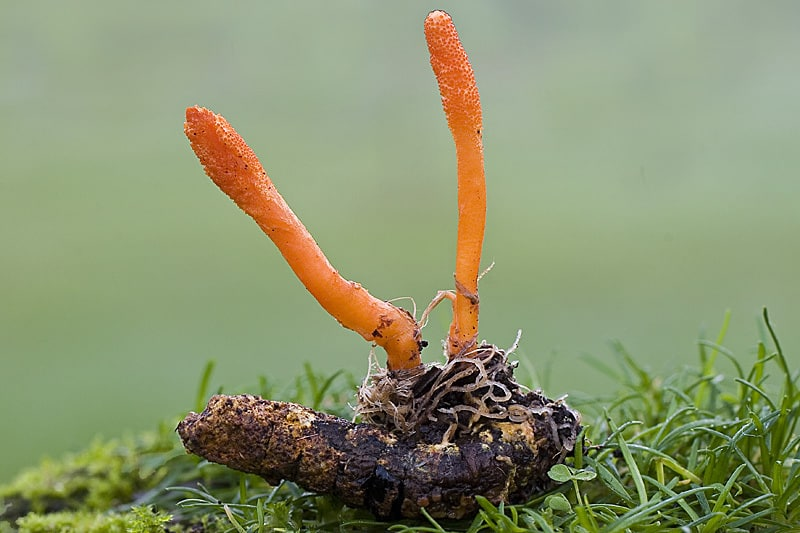

If you ever see the orange stoma in the wild, you can dig down about 2-5cm to find the host, and take a cool picture like the ones above. I think this fungi is very interesting, because usually when I think of cordyseps, I think of the species in tropical regions which actually have the ability to change and direct the ability of adult insects. It is creepy to think about these fungi evolving to infect humans in the same way. If it gives you comfort, I asked my pathogen genomics professor if it is possible and she said she doubts it, so whew!
Despite the presence of cordyseps in the Midwest, it is completely safe for humans, and some people even cook and eat the C. militaris stoma. I personally would not risk it, but if you're in a crunch, you can! That's all I have for today, I hope you found this blog interesting, and I will return in 2 weeks!



Comments